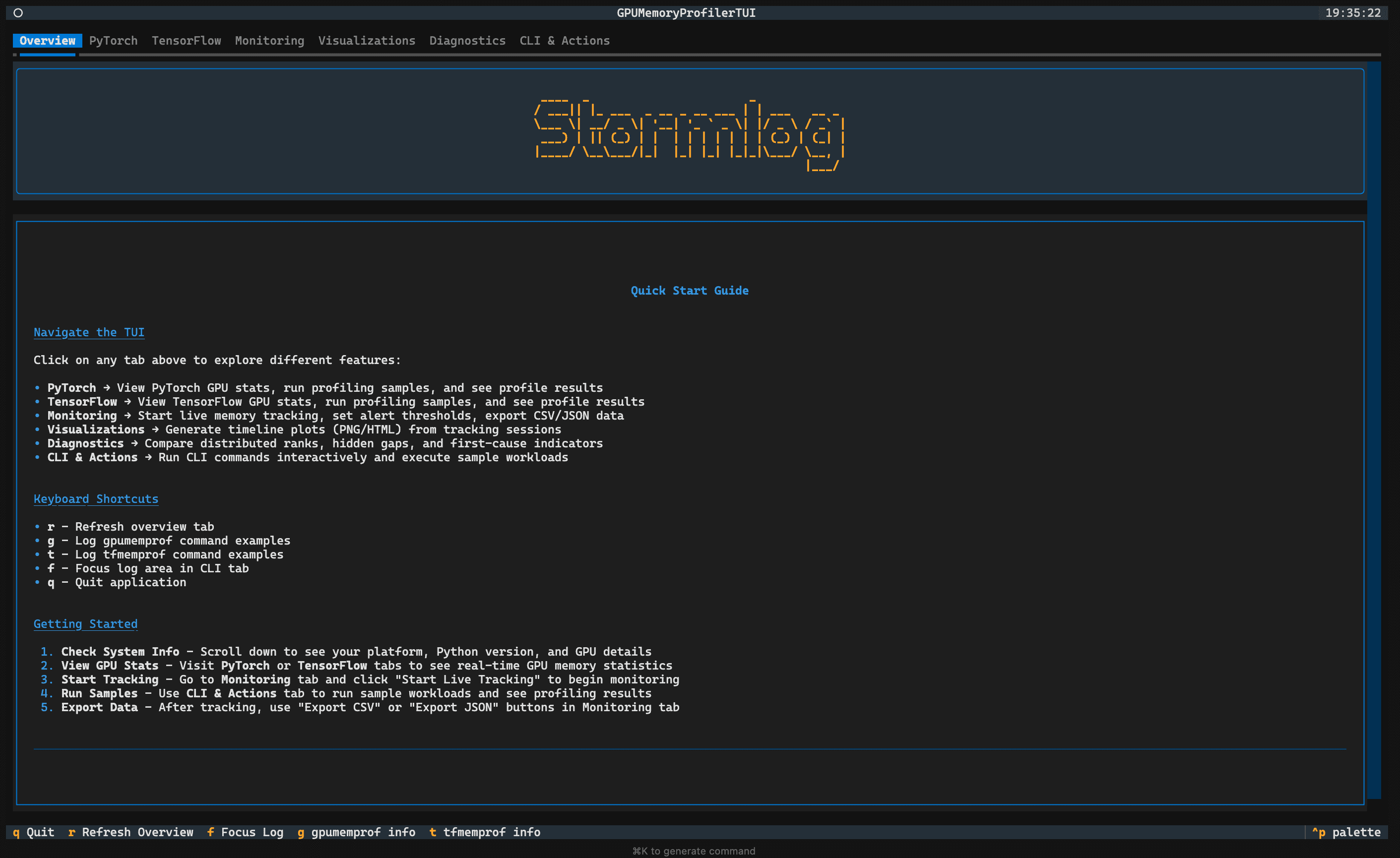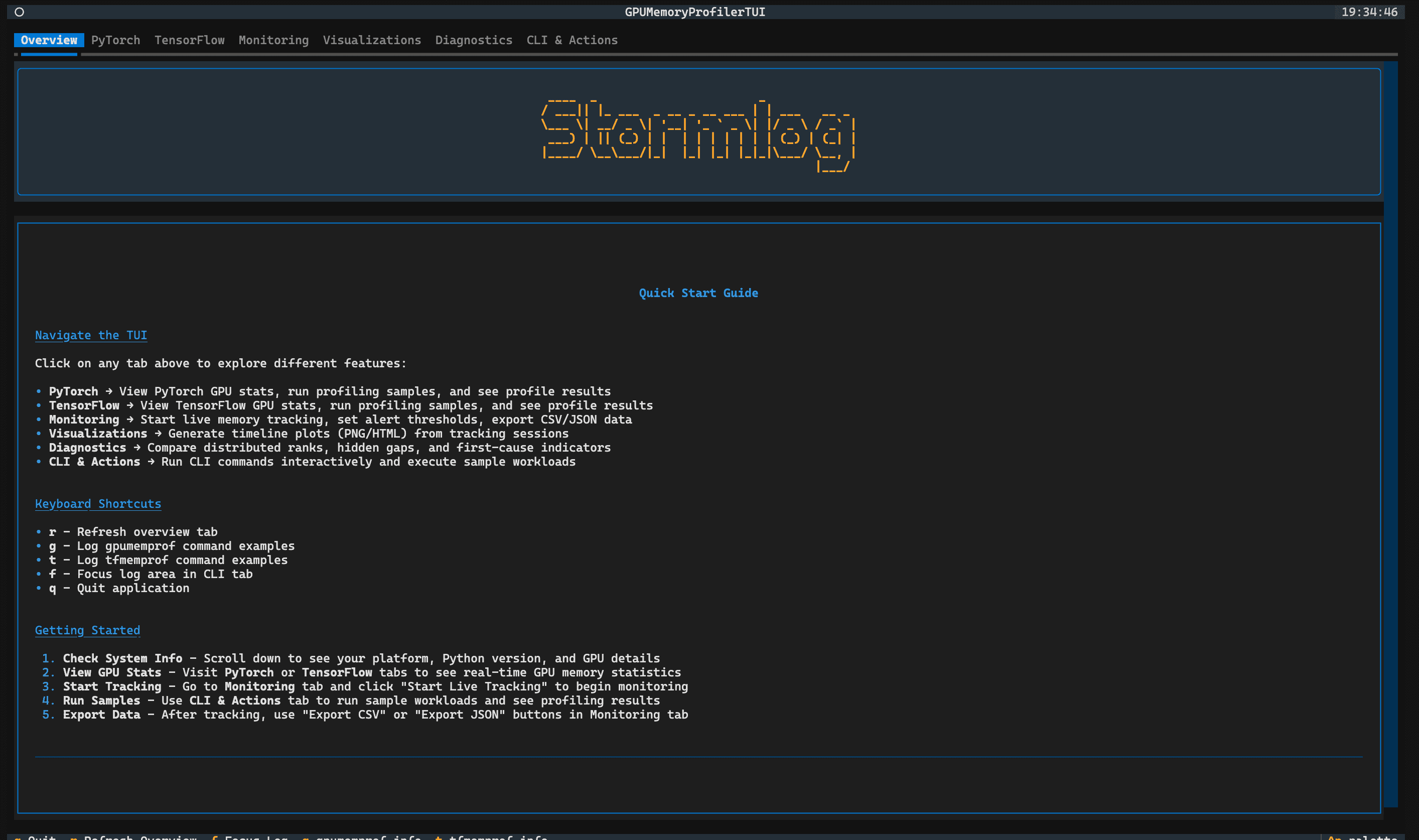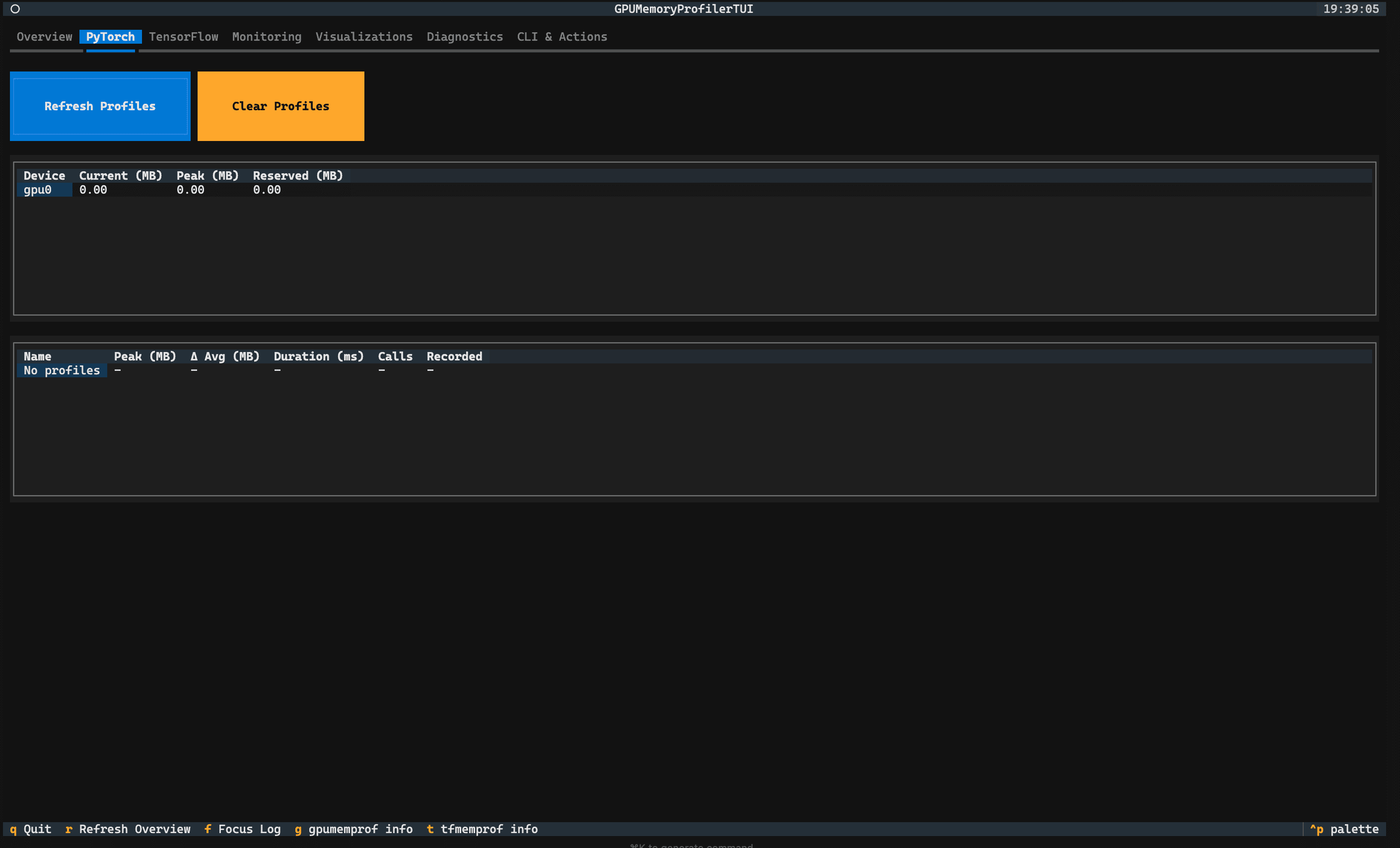
Stormlog started as a memory-profiling toolkit for PyTorch and TensorFlow. This release widens that surface in two directions teams kept asking for: native JAX memory profiling, and a dedicated profiler for OpenAI-compatible inference endpoints.
Both additions follow the same principle the project started with — move from "what is using memory?" or "what is my endpoint doing under load?" to saved artifacts and shareable diagnostics without switching tools. Here's what shipped and how to use it.
JAX, Profiled Like Everything Else#
JAX runs on XLA, and XLA's allocation and caching behavior is exactly the kind of thing that's hard to see from the outside. Stormlog now tracks those allocations directly, so a jax.jit function gets the same treatment as a PyTorch training step or a TensorFlow graph.
The new APIs live under stormlog.jax, and the framework-specific dependencies install through a dedicated extra:
pip install "stormlog[jax]"JAX-specific APIs are namespaced so they never collide with the PyTorch or TensorFlow surfaces:
from stormlog.jax import JAXMemoryProfilerProfiling a jitted function#
XLA compilation and caching are central to JAX performance and memory behavior. You can profile a jax.jit function identically to standard JAX operations — Stormlog tracks the underlying XLA allocations either way. Remember to block_until_ready() so you're measuring real device work rather than an async dispatch that hasn't landed yet:
import jax
import jax.numpy as jnp
from stormlog.jax import JAXMemoryProfiler

profiler = JAXMemoryProfiler()

@jax.jit
def fast_training_step(x):
    return jnp.dot(x, x)

with profiler.profile_context("jitted_step"):
    x = jnp.ones((1000, 1000))
    y = fast_training_step(x)
    y.block_until_ready()

results = profiler.get_results()
print(f"Peak memory: {results.peak_memory_mb:.2f} MB")
Decorating functions for global instrumentation#
For library code or deep architectures where context managers are intrusive, the profile_function decorator instruments a JAX function wherever it's called:
from stormlog.jax import profile_function
import jax.numpy as jnp

@profile_function(name="custom_matmul")
def custom_matmul(a, b):
    res = jnp.dot(a, b)
    res.block_until_ready()
    return res
Devices, sharding, and pmap#
Stormlog attributes memory back to JAX devices. On multi-GPU or TPU setups using jax.sharding or jax.pmap, it aggregates memory profiles across the requested device scopes. Match the install to your runtime:
- CUDA — requires
jax[cuda12] - TPU — requires
jax[tpu] - CPU — standard
jax, used automatically byjaxmemprofwhen no accelerators are present
A CLI that mirrors the rest of Stormlog#
JAX gets its own jaxmemprof command line tool, with the same verbs you already know from the PyTorch and TensorFlow CLIs:
jaxmemprof info
jaxmemprof monitor --interval 1.0 --threshold 4000
jaxmemprof track --duration 60 --output jax_track.json
jaxmemprof diagnose jax_track.json
The heavier operational features carry straight over: telemetry sink segments, distributed identity (job_id, rank, local_rank, world_size), and the OOM flight recorder that dumps a ring buffer of events when a run trips its threshold.
Offline analytics from exported logs#
If you've exported a tracking log with the CLI, you can pipe it back into the Python API for offline heuristics like fragmentation checks or leak detection:
from stormlog.jax.analyzer import MemoryAnalyzer

analyzer = MemoryAnalyzer()
findings = analyzer.analyze_memory_gaps(events)

for finding in findings:
    print(f"Gap detected: {finding.severity}")
Inference Profiling for OpenAI-Compatible Endpoints#
The second addition answers a different question: not "how much memory does my training step use?" but "what is my serving endpoint actually doing under load?"
The new stormlog infer command group drives controlled traffic against any endpoint that speaks the OpenAI Chat Completions request shape. That deliberately spans a lot of backends — PyTorch, vLLM, SGLang, TensorRT-LLM, MLX-LM, or a hosted gateway. It's intentionally separate from gpumemprof and tfmemprof, because the thing you're measuring is the endpoint's behavior, not a local process.
Profiling an endpoint#
stormlog infer profile \
  --base-url http://localhost:8000/v1 \
  --model Qwen/Qwen2.5-7B-Instruct \
  --concurrency 1,4,8 \
  --input-tokens 512,2048 \
  --output-tokens 128,512 \
  --requests 50 \
  --output artifacts/infer.jsonl
The profiler sweeps a matrix of workload cases — concurrency, prompt token target, output token cap, and streaming or non-streaming mode. --requests sets the total measured request count per case (shared across workers), or use --duration to run each case for a fixed wall-clock window. Warmup requests are recorded but excluded from analysis with --warmup-requests.
Reading the report#
stormlog infer analyze artifacts/infer.jsonlThe analysis covers the metrics you'd actually take into a capacity or regression conversation:
- End-to-end latency percentiles
- TTFT percentiles and first streamed chunk latency for streaming responses
- Requests/sec
- Output tokens/sec and total tokens/sec
- Failure rate
- Peak sampled device memory when system telemetry is available
Token accounting you can trust#
Server usage metadata is preferred whenever the endpoint returns it. When it's missing, Stormlog falls back to the configured tokenizer and records the source on every request event — server_usage, tiktoken, transformers, estimated, or unknown — so you always know how a token count was derived. For streaming, it requests OpenAI-style usage with stream_options.include_usage by default, with --no-stream-usage available for endpoints that reject that field.
Installing the New Surfaces#
Both additions are opt-in extras, so you only pull the dependencies you need:
pip install "stormlog[jax]"              # JAX memory profiling
pip install "stormlog[infer-tokenizers]" # inference tokenizer fallbacks
pip install "stormlog[all]"              # everything: viz, TUI, torch, tf, jax, W&B, infer
stormlog[all] installs every runtime extra at once if you'd rather not think about it.
Why It Matters#
The throughline across both features is the same one Stormlog launched with: keep the debugging loop tractable and the evidence durable. JAX users get real visibility into XLA allocations with the workflow, CLI, and artifact format the rest of the toolkit already uses. Teams running inference get a way to measure latency, throughput, and device memory against a real endpoint and save those numbers for the next review.
Update with pip install --upgrade "stormlog[all]", point jaxmemprof at your next JAX run, or aim stormlog infer profile at a serving endpoint — and as always, the artifacts are yours to keep.